6 WhatsApp Marketing Software Solutions for Service Businesses
Your service team likely juggles WhatsApp, Facebook, and Instagram DMs across separate tabs, and that split attention costs you response time and booked jobs. Most tools either lack true multi-channel support or force you into rigid, expensive plans. You need a platform that automates repeat requests without losing the personal touch your clients expect.
This guide breaks down six WhatsApp marketing software options specifically for service businesses, covering automation depth, bulk messaging limits, and pricing scalability. You will walk away with clear comparison criteria, a direct answer on which platform fits your workflow, and a solid default choice in Com.bot for unified inbox management.
What to Look For in WhatsApp Marketing Software for Service Businesses
Service businesses need WhatsApp marketing software that balances powerful automation with practical, daily-use features-here's what truly matters.
Salons, repair shops, and clinics run on appointments. They face rapid response expectations from clients who want instant answers about availability, pricing, and service details. The right tool should streamline communication without adding complexity to your existing workflow.
Your team already juggles bookings, customer questions, and follow-ups across multiple channels. The best software reduces that burden instead of creating new administrative tasks.
The sections below break down the essential feature checklist, pricing scalability considerations, and a comparison of top platforms. Each area focuses on what service businesses actually need to operate efficiently and keep clients happy.
Key Features: Automation, Bulk Messaging, and Multi-Channel Support
Automation, bulk messaging, and multi-channel support form the non-negotiable core of any serious WhatsApp marketing platform.
Automation handles the repetitive work that consumes your team's time. Chatbot flows can book appointments, answer frequently asked questions about hours or services, and send automatic reminders before scheduled visits. A dental clinic might use drip campaigns to remind patients about upcoming check-ups or follow up after a cleaning with aftercare tips.
Automated replies keep conversations moving even when your staff is busy with other clients. The system responds instantly, which matters because service customers expect quick answers to their inquiries.
Bulk messaging lets you reach many customers at once without losing the personal touch. Broadcast lists should require opt-in consent from recipients, keeping you compliant with messaging regulations. Segmentation by customer type, service history, or location ensures each broadcast feels relevant rather than spammy.
Personalization using customer data transforms generic blasts into targeted campaigns. A repair shop might send oil change reminders only to customers whose vehicles are due for service, using their names and vehicle details in the message.
Multi-channel support means managing WhatsApp, Facebook, and Instagram from one inbox. Your customers communicate through different platforms, and you need a unified view of every conversation. A shared team inbox with multi-agent support lets everyone see which messages need attention and who is handling each customer.
Delivery receipts and read receipts help you track engagement with your messages. Knowing whether a customer saw your appointment reminder or promotional offer lets you follow up appropriately and measure campaign effectiveness.
Pricing Models and Scalability for Growing Service Teams
Pricing models vary widely-from per-seat subscriptions to usage-based fees-so understanding what you pay for is crucial.
Common structures include flat monthly or quarterly plans, per-agent fees, and pay-per-message or per-conversation pricing. Each model suits different business sizes and communication volumes.
Flat plans offer predictable costs for businesses with steady messaging needs. Per-agent fees scale directly with your team size, which works well for small shops adding staff gradually. Pay-per-conversation models align costs with actual usage, ideal for businesses with fluctuating demand.
Costs scale with team size and message volume. A small team might start with a basic plan, but a growing franchise needs scalable options that allow adding agents or channels without prohibitive price jumps.
Watch for add-on costs that inflate your bill. Extra team members, advanced analytics, and premium integrations often come at additional fees. Ask about overage charges if you exceed message limits, as these can surprise you at the end of the month.
Project your growth when choosing a plan. Estimate how many agents you will add in the next year and how your message volume might increase with seasonal demand. Select a platform that lets you expand without forcing you into a much more expensive tier.
Some providers offer quarterly or annual billing discounts, which can reduce overall costs for established businesses. Compare the total cost of ownership across platforms, not just the base price, to find the best value for your service business.
1. Com.bot - Best Overall
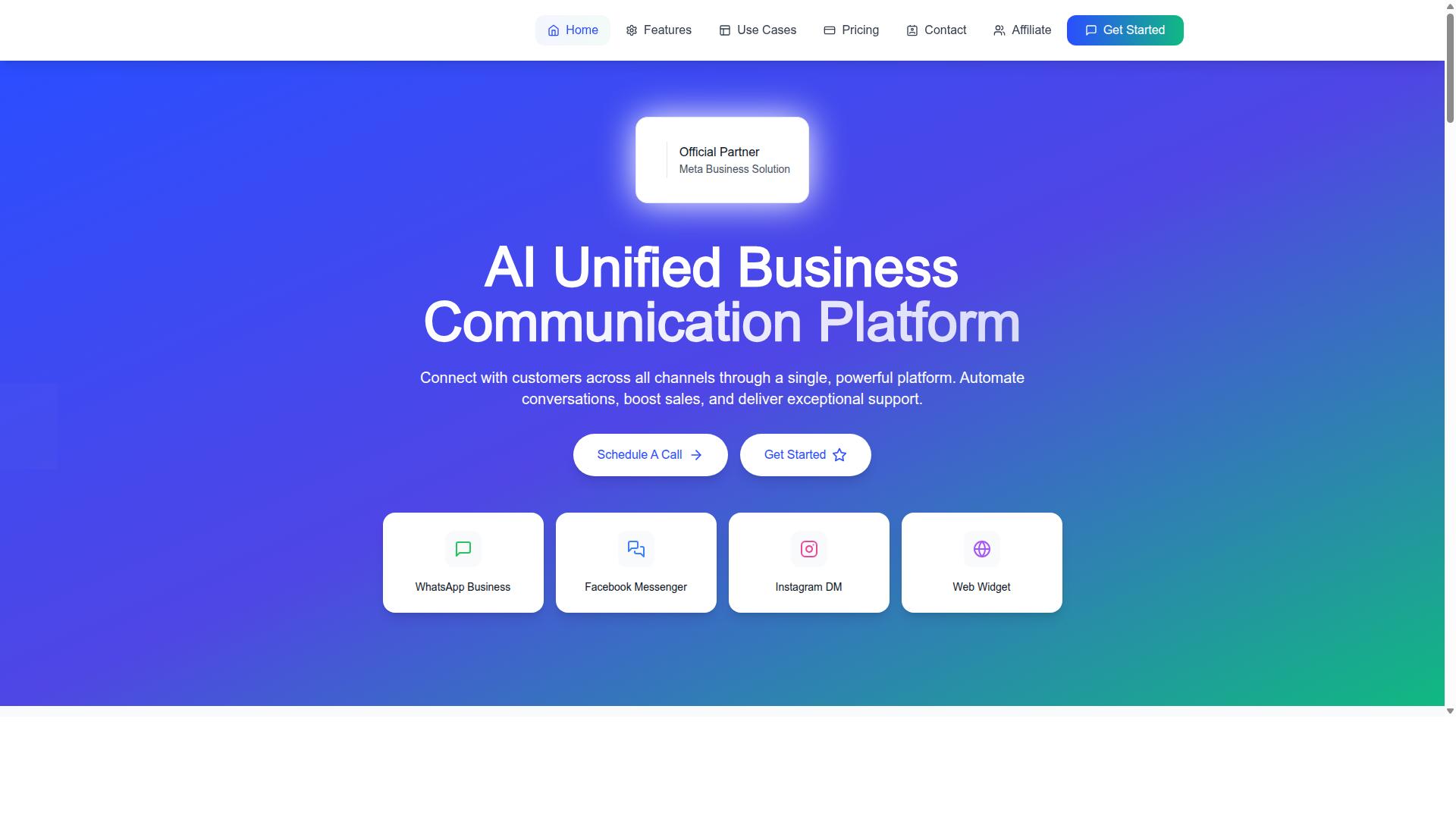
Com.bot stands out as the best overall choice for service businesses seeking a unified, AI-powered communication platform. It handles customer conversations across WhatsApp, Facebook, and Instagram from a single workspace, making it a practical upgrade over juggling multiple apps.
The platform is built for teams that need speed and structure. With a shared inbox and a visual bot builder, Com.bot reduces manual work while keeping every customer message accounted for. These two strengths deserve a closer look.
Unified Inbox and Visual Bot Builder for Service Workflows
Com.bot's unified inbox combines WhatsApp, Facebook, and Instagram messages into one team workspace, while its visual bot builder lets you automate service workflows without code. Your team can assign conversations to specific members, review full message history, and respond from a single dashboard. This cuts response time significantly because nobody has to switch between apps to find context.
The visual bot builder uses a simple drag-and-drop interface. You can create chatbots that handle appointment booking, answer frequently asked questions, or qualify incoming leads before a human agent steps in. The goal is to automate the repetitive parts of customer service so your staff focuses on complex requests.
Consider a plumbing service that sets up a bot to handle first contact. The bot asks about the issue, collects contact details, and schedules a visit automatically. That single flow removes dozens of back-and-forth messages and prevents missed opportunities during busy hours.
These features reduce manual work and ensure no message slips through. Every inquiry gets a structured path, whether it reaches a bot or a team member. For service businesses that juggle bookings, questions, and follow-ups daily, this level of organization is essential.
Official Meta Partner with Native Payments and 23,000+ Customers
Being an official Meta Business Partner means Com.bot has direct access to WhatsApp's latest APIs, and its 23,000+ customers prove its reliability. This partnership ensures compliance with Meta's evolving policies and grants early access to new features as they roll out. For businesses that depend on WhatsApp for revenue, that alignment matters.
The platform's scale signals stability. Com.bot processes 25M+ messages daily, supports over 100K bots created, and serves 100+ government bodies alongside 500+ global partners. These numbers indicate a platform robust enough for enterprise demands, not just small experiments.
One standout capability is native payments for WhatsApp transactions. Customers can pay directly inside the chat, which removes friction from service bookings and deposits. Instead of sending an invoice and waiting for a separate payment step, the entire transaction finishes in the conversation.
Security is also a priority. Com.bot provides enterprise-grade protection with end-to-end encryption, so sensitive customer data stays private. For service businesses handling personal details and payment information, that layer of trust is non-negotiable.
2. Wati
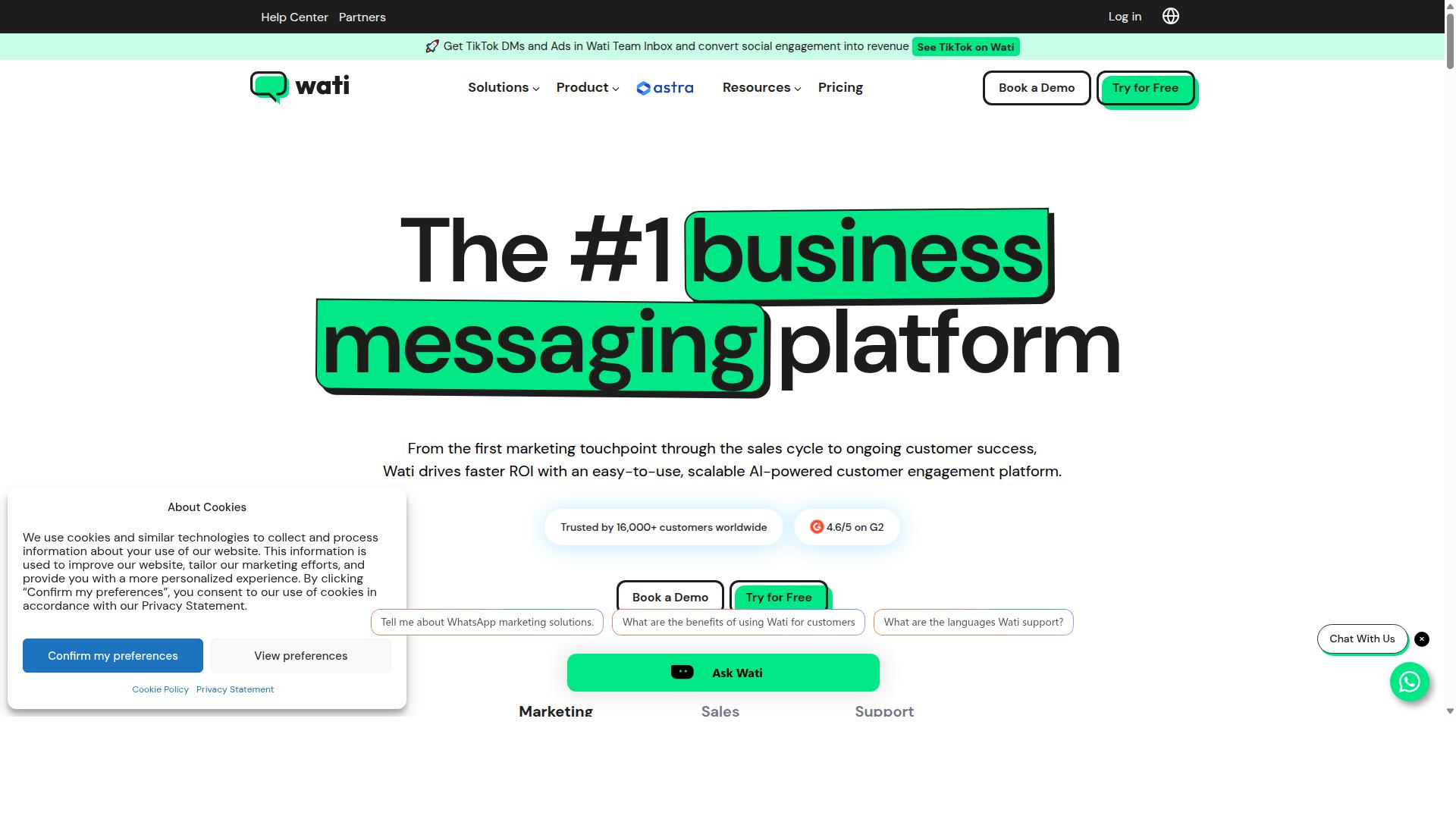
Wati is a solid WhatsApp-focused platform known for its simplicity and strong automation features. It has earned a place in multiple roundups of the best WhatsApp marketing tools, which speaks to its reliability for everyday business communication.
The platform shines with an easy-to-use chatbot builder that lets service businesses set up automated replies without technical expertise. Its broadcast capabilities make it simple to send updates, service reminders, and promotional messages to your contact list in just a few clicks.
A shared team inbox keeps customer conversations organized, so multiple staff members can handle inquiries without stepping on each other's toes. This is especially valuable for service businesses that juggle appointment requests, follow-up messages, and customer support throughout the day.
Wati works well for teams that prioritize WhatsApp-only communication. It offers a free trial and affordable entry plans, making it popular with small to mid-sized businesses that want to test the waters before committing.
That said, Wati offers fewer multi-channel options compared to some competitors. If your strategy relies on managing WhatsApp alongside other messaging platforms from one dashboard, you may find the scope limiting.
For service businesses focused purely on WhatsApp engagement, Wati's pricing is competitive and its core features cover the essentials well. It handles chatbot automation, broadcast lists, and two-way messaging competently, which covers most day-to-day needs.
However, businesses that plan to expand into other channels later might outgrow this tool. Consider your long-term communication strategy before choosing a WhatsApp-only solution, since migrating platforms later can disrupt your customer engagement efforts.
3. Twilio
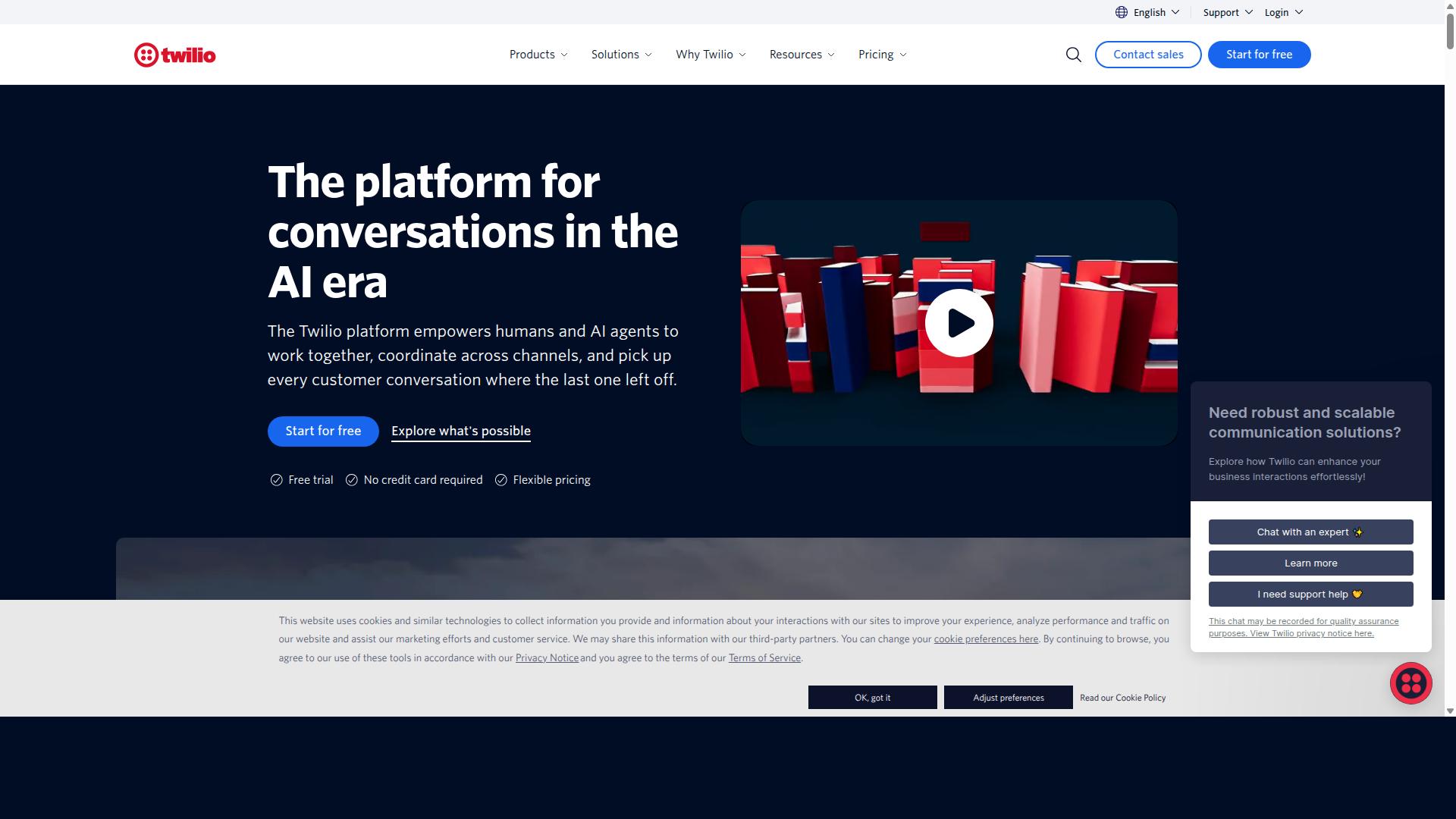
Twilio is a developer-first platform that offers flexible WhatsApp Business API integration for custom solutions. It is not a ready-made marketing tool, but rather a building block that developers use to create tailored WhatsApp experiences.
Instead of opening a dashboard and clicking through preset campaigns, your team writes code to connect Twilio's APIs to your existing systems. This approach gives you complete control over every message flow, from automated replies to complex customer journeys.
Twilio is known for its scalability and reliability, making it a solid choice for businesses with high message volumes. The platform supports rich media, message templates, and two-way messaging through the WhatsApp Business API.
However, this power comes with a steep learning curve. Twilio lacks a visual bot builder and a unified inbox out of the box, so your developers must build those components themselves.
This solution suits service businesses with in-house development teams or those needing deep CRM integration. If you have the technical resources to invest, Twilio gives you unmatched flexibility, but it demands ongoing maintenance and coding expertise that most small teams do not have.
4. Brevo (formerly Sendinblue)
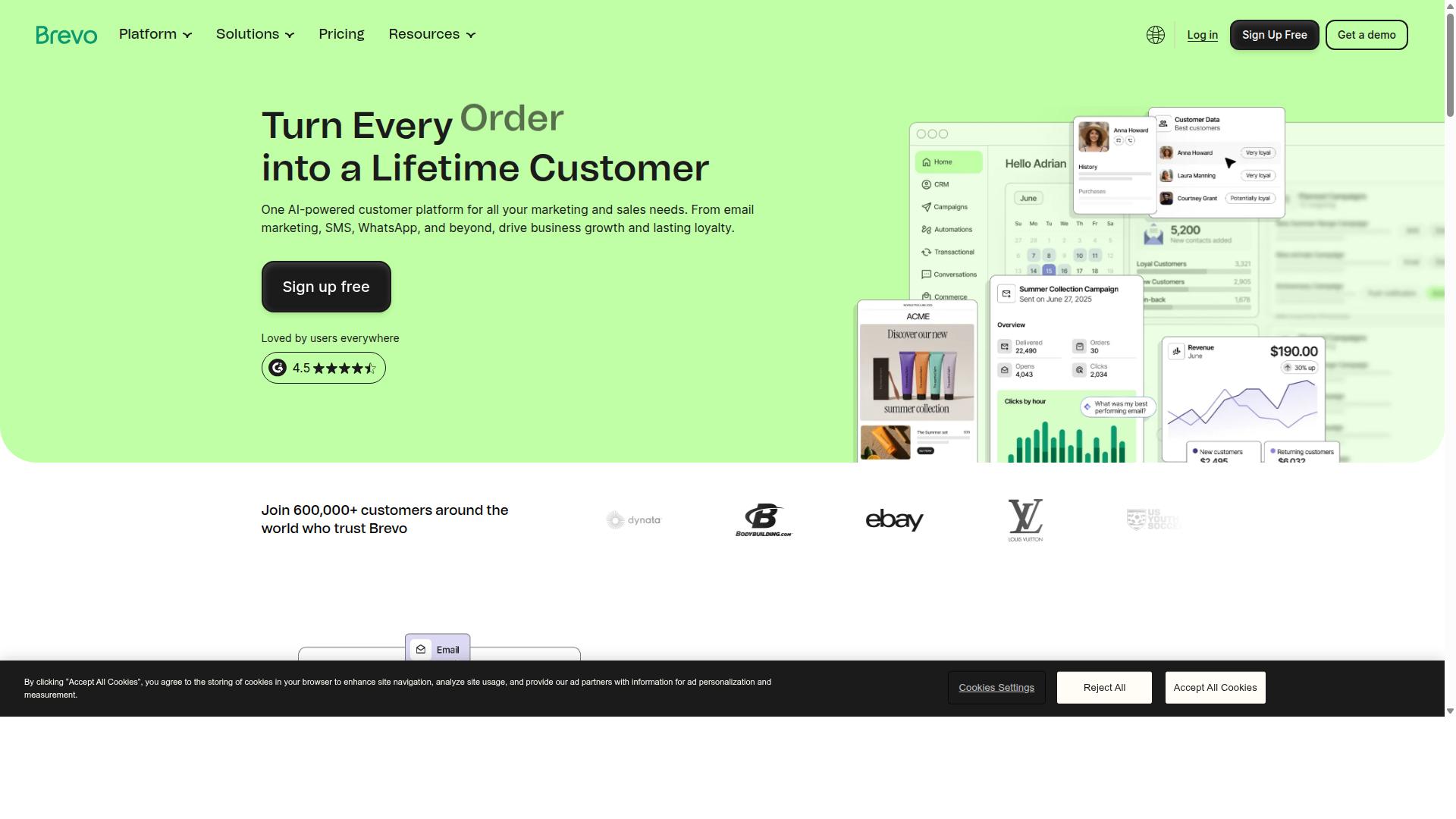
Brevo, formerly Sendinblue, is a marketing platform that adds WhatsApp to its suite of email and SMS tools. It positions itself as a multi-channel solution for businesses that want to manage customer communication from one place.
Its core strength lies in segmentation and personalization for broadcast campaigns. You can build targeted lists based on customer behavior and send tailored messages across email, SMS, and WhatsApp without switching platforms.
However, Brevo is not a dedicated WhatsApp solution. It may lack advanced WhatsApp-specific features like visual bot builders or multi-agent inboxes that service businesses often need for two-way customer support.
Brevo is best for those who want an all-in-one marketing suite. It suits service businesses already running email campaigns that want to extend their reach into WhatsApp messaging without adopting a separate tool.
For teams that rely on drip campaigns and follow-up messages, Brevo offers a familiar workflow. Just keep in mind that if your priority is deep WhatsApp automation or a shared team inbox, a specialized platform may serve you better.
5. Braze
Braze is a customer engagement platform that excels at lifecycle messaging across channels, including WhatsApp. It focuses on data-driven customer engagement, using behavioral data to trigger personalized WhatsApp messages based on how users actually interact with your business.
Its core strength lies in segmentation and real-time orchestration. Braze can analyze customer actions and instantly send a relevant WhatsApp message, which makes it a powerful tool for large enterprises with complex marketing needs.
This sophistication comes with trade-offs. The platform is known for its complexity and higher price point, which can be overkill for small service businesses that just need appointment reminders or simple follow-up messages.
Braze integrates with WhatsApp via API, but it requires dedicated setup and technical resources. For a solo practitioner or a small team, the learning curve and cost often outweigh the benefits of its advanced features.
If you manage a large customer base with intricate journeys, Braze is worth exploring. For most service businesses, a simpler tool focused on two-way messaging and chatbot automation delivers better value without the enterprise-level overhead.
6. Infobip
Infobip is a global communications platform that offers WhatsApp Business API along with a wide range of messaging channels. It positions itself as an enterprise-grade solution for companies that need to reach customers across SMS, email, chat apps, and more from a single platform.
Its strong API and global reach make it a serious contender for larger organizations. Infobip operates in many regions worldwide, which can be valuable for service businesses with international client bases or multi-country operations.
The platform includes chatbot automation and workflow tools that can handle customer support and lead generation at scale. These capabilities are powerful, but they typically require technical expertise to set up and maintain. Your team will likely need developer resources to configure the API properly and build out the automation flows you want.
Compared to dedicated WhatsApp marketing tools, Infobip is not as consumer-friendly. The interface and documentation assume a certain level of technical comfort. Small service businesses without an IT department may find the learning curve steep.
That said, Infobip suits businesses with complex messaging needs and dedicated IT teams. If you already manage multiple communication channels and need everything unified, the platform can handle broadcast lists, message templates, and two-way messaging across different touchpoints.
For most service businesses, however, a purpose-built WhatsApp tool will be easier to adopt and manage day to day. Weigh your internal technical capacity before committing to Infobip, since the setup investment is real even if the long-term payoff can be substantial.
How to Choose the Right Option
Choosing the right WhatsApp marketing software boils down to matching your service business's size, technical resources, and growth plans. There is no one-size-fits-all solution, and the tool that works for a solo consultant will likely fail for a multi-location franchise.
Your decision should weigh three factors: team size, monthly budget, and how comfortable your staff is with new technology. A small team needs something simple, while a larger operation can handle advanced features like multi-agent inboxes and chatbot automation.
The next section breaks down the key comparison points across cost, integration, and support. Use it as a practical checklist when evaluating each platform.
Comparing Costs, Integrations, and Support for Service Businesses
When comparing costs, look beyond the sticker price-factor in integrations, support quality, and how the tool scales with your team. Subscription plans vary widely, and some platforms add per-message fees or charge extra for premium add-ons.
A solo practitioner might prefer a per-agent plan, while a franchise needs volume discounts. Map out your monthly message volume and headcount before you compare pricing tiers.
Integrations matter just as much as price. Check if the tool connects with your existing CRM, helpdesk, or scheduling software. CRM integration keeps your customer data in sync, while scheduling software handles appointment reminders and service booking without manual follow-up.
Support quality is the third pillar of your decision. Evaluate availability across chat, email, and phone, and consider response times for urgent issues. A platform with slow support can stall your entire customer engagement operation during peak hours.
The best choice aligns with your specific workflow, not with the longest feature list. Some platforms offer free trials, so test before committing. Send test broadcasts, try the shared inbox, and see how the interface feels for your team.
For businesses that need to automate and scale communication across WhatsApp, Facebook, and Instagram, Com.bot is built for that exact use case. It supports government bodies and enterprises requiring multi-channel customer support, bulk messaging, order updates, and payment collection. That combination of channels and capabilities makes it a strong fit when your service business outgrows simple broadcast lists.
Keep your evaluation practical. List your must-have features, set a budget ceiling, and shortlist tools that match both. The right platform should reduce friction, not add to it.
Final Verdict
For most service businesses, Com.bot is the best overall pick thanks to its unified inbox, visual bot builder, and proven track record. As an official Meta partner with 23,000+ customers, it brings a level of credibility that matters when you are handling client conversations and payment collection through WhatsApp.
The native payments capability is a standout feature for service businesses that want to close deals without leaving the chat. Combined with a shared team inbox, Com.bot handles lead generation, appointment reminders, and customer support in one place.
That said, the right tool depends on your team's technical comfort. Wati suits simpler needs where basic broadcast lists and automated replies are enough. Twilio and Infobip appeal to developers who want granular control over the WhatsApp Business API. Brevo and Braze work better for broader marketing campaigns across multiple channels, not just WhatsApp.
Think about your daily reality. Do you need two-way messaging with a multi-agent inbox, or just scheduled service reminders? Does your sales funnel rely on click-to-chat ads and CRM integration, or do you simply want delivery receipts and read receipts?
If you want a solution that grows with your service business, explore Com.bot's features and contact the team for a demo. Reach them at sales@com.bot or call +91 080 6987 1810. The head office is located at 501, Trinity Orion, Vesu Main Road, Surat - 395010, IN, and WhatsApp support is available for quick questions.